The Dirt in Your Driveway Might Be ALIVE
When you look at your driveway in need of some cleaning, you probably only see dirt. Maybe some grime, a few stains, and that weird dark stuff that always seems to appear after it’s been raining. Nothing particularly exciting. It’s why we have the saying “as boring as dirt.” Except some of that “dirt” may not be dirt at all. Your driveway could be hosting a tiny, thriving ecosystem of un-boring and actually terrifying life.
That Black and Green Filth Is Growing
Hard surfaces are surprisingly good real estate for certain organisms. The Royal Horticultural Society notes that
algae, lichens, liverworts, and moss commonly establish themselves on places like driveways, paths, patios, decking, and steps. So that greenish film or fuzzy-looking buildup you’ve been mentally filing under “gross driveway schmutz” may not be composing epic operas or trying to establish communication with you, but it very well might be alive.
Algae, for example, can form a thin, powdery film over everything from concrete to paving, stone, tarmac, and decking. They particularly enjoy wet conditions, with growth accelerating in shady spots where air doesn’t circulate particularly well, which describes the bulk of Texas driveways. The RHS also notes that these buildups can become especially noticeable after wet winters.
Sometimes, the “Dirt” Gets Slippery
Here’s why this isn’t merely an aesthetic problem. The organisms growing on your driveway aren’t necessarily damaging the surface itself. Algae and lichens etc. don’t actually pose a threat to your driveway itself. However, they can make surfaces slippery, which is a great feature in skating rinks and the like. But it’s considerably less charming when the surface in question is somewhere people walk.
Researchers at the University of Venda have also examined algae colonization on brick pavement and its relationship to slipperiness.
Their study found that bacteria, cyanobacteria, and algae are capable of colonizing not just flat surfaces, but any kind of outdoor impermeable structure since those trap water and nutrients that encourage growth of microorganisms. The study also found that the slippery effect of algae is due to their production of a gluey, gelatinous substance known as mucilage that becomes like a slippery gel in water.
So, the innocent-looking dark patch beside your garage may not just be an ugly stain. Under the right conditions, it can be part of a living layer that makes the ground beneath your feet a potentially costly health hazard.
Thankfully, You Don’t Need a Biology Degree to Deal with the Problem
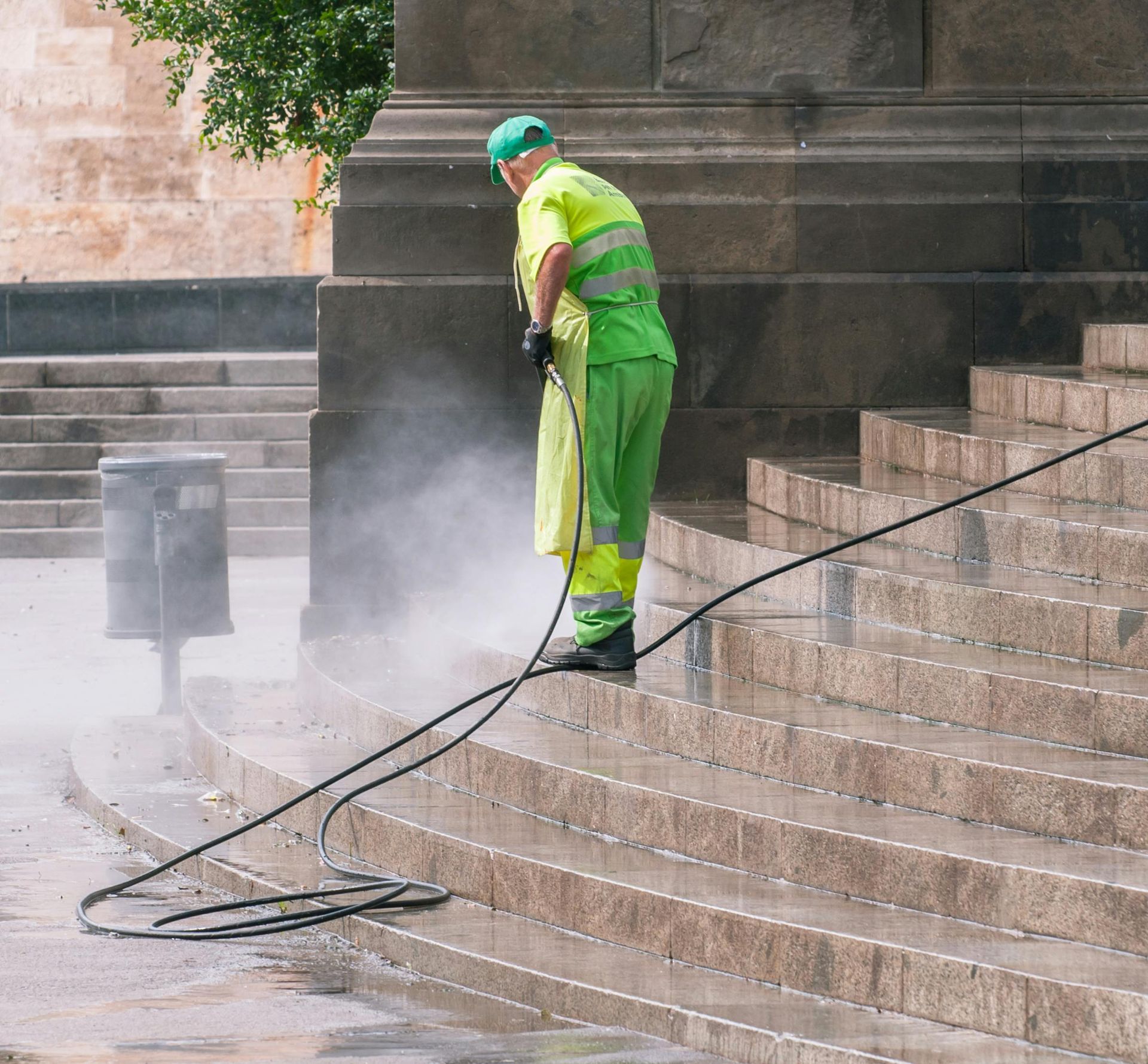
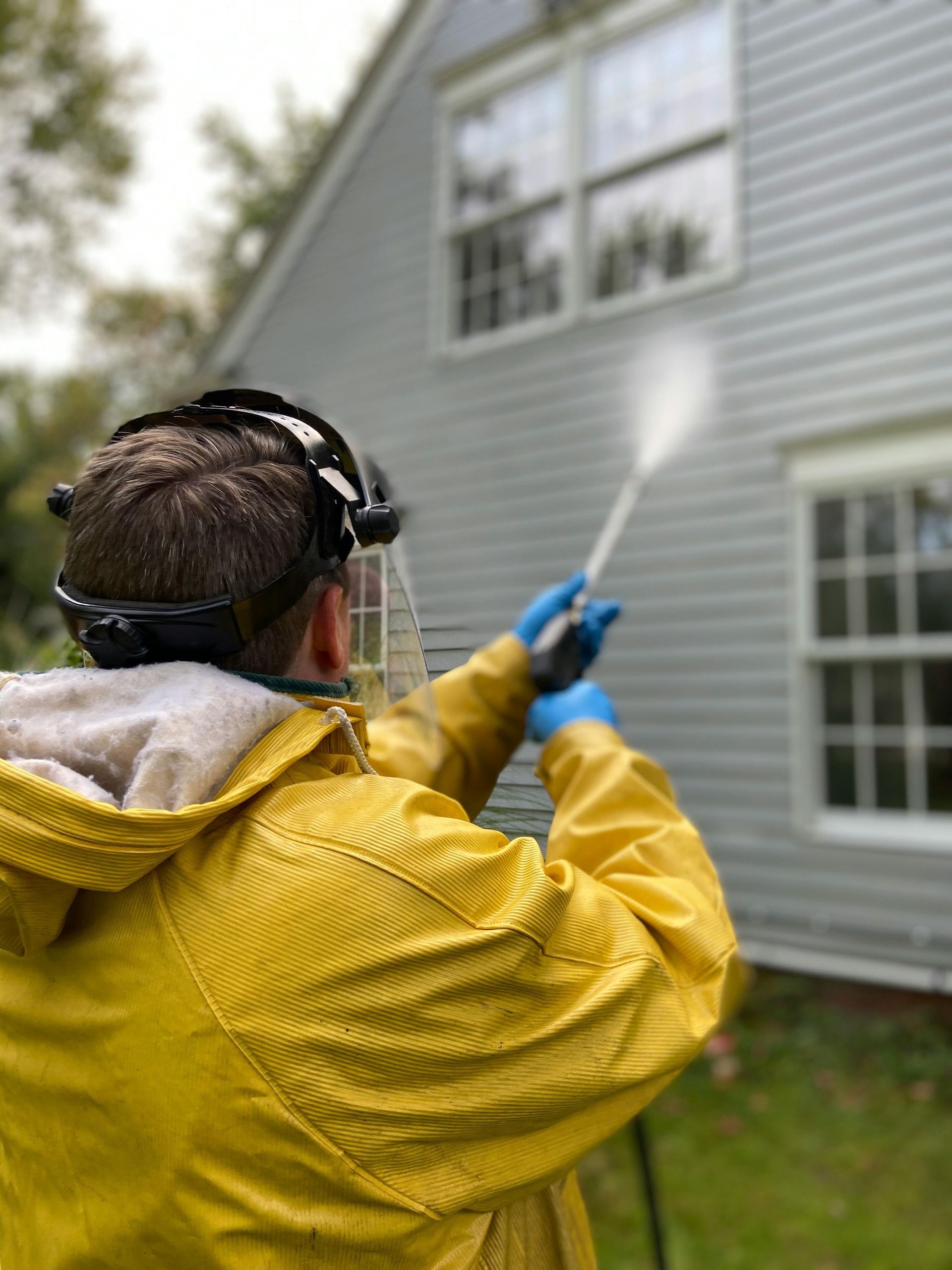
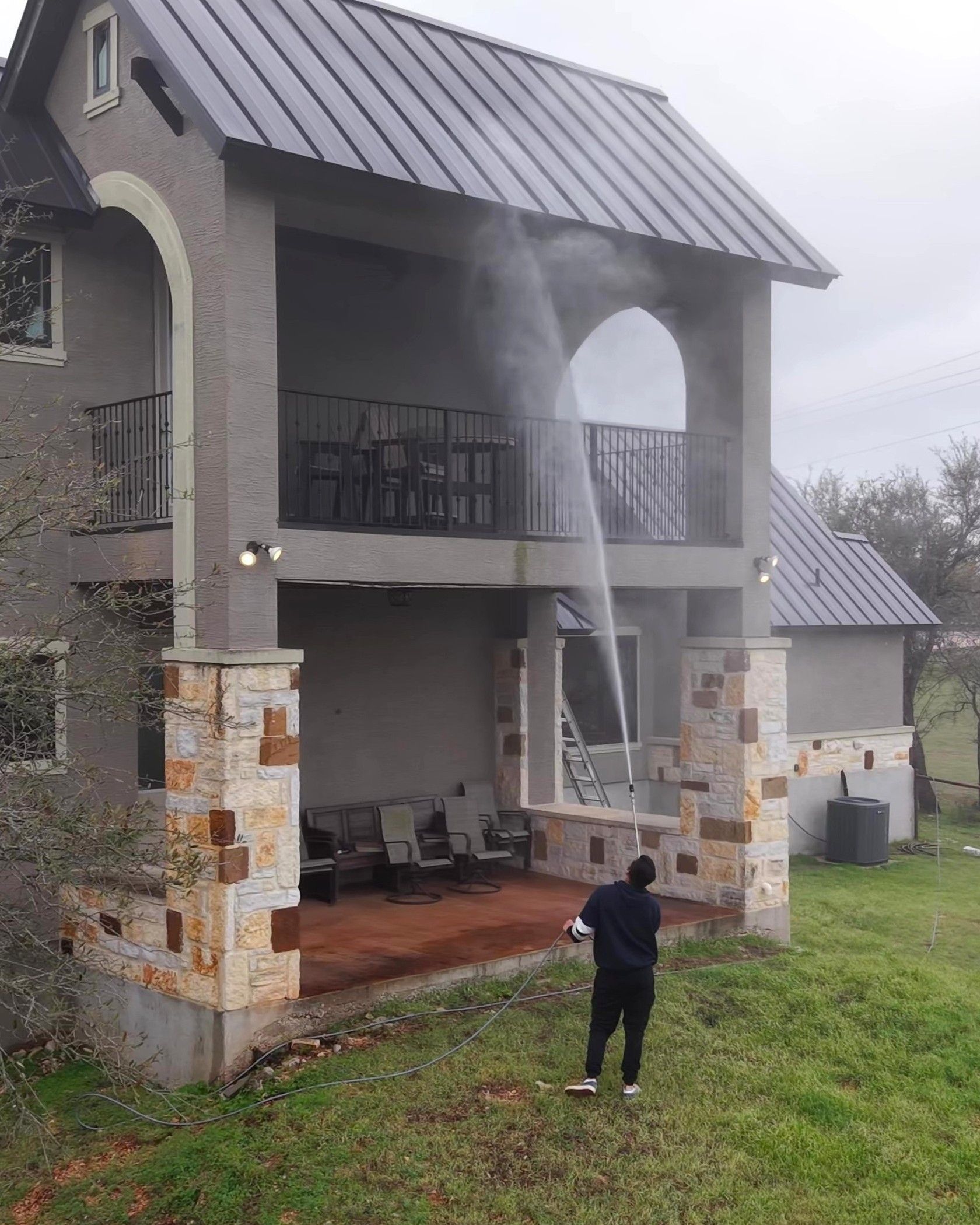
You don’t need to identify every specific microscopic driveway squatter before dealing with the problem. Physically removing established growths with stiff brushing etc. will sufficiently deal with the issue but pressure washing has the added benefit of being quicker and easier on your back. But it should be left to professionals.
Pressure washers are very fun to handle. So much so that there are many pressure-washing video games out there. But if not handled correctly, a pressure wash will not address the problem of moisture, shade, and poor drainage, and in no time, the algae and other microorganisms will return. You don’t need to panic but if your concrete is developing green, black, slimy, or mossy buildup, it may be time to stop treating it like ordinary dirt, and start dealing with it like an infestation that’s best handled by pros.
A professional exterior cleaning can remove the visible “living dirt” buildup and restore a surface to its original condition. Because your driveway is supposed to be where you park the car, not where algae, moss, and other microscopic pests decide to establish a vacation home.